Motoring News
Buying a car in the UK in 2026
What drivers want, top tips, and how expectations have shifted since last year
Ryan Barham
Last updated: 07/10/2026
Ryan Barham
Last updated: 07/10/2026
Buying a car in the UK is one of the biggest financial decisions most of us make, and getting it right matters even more with rapidly changing technology, shifting environmental policies, and ongoing economic factors.
Last year, we surveyed 2,000 UK motorists to uncover how Brits buy cars. In 2026, we’ve conducted the study again to see what’s changed.
By comparing this year’s data directly against our 2025 findings, this report highlights the key year-on-year shifts in driver demand, and the most available cars based on average price and mileage drivers say they are looking for.
We’ll also offer practical advice to help you buy your next vehicle with confidence.
There’s been very little change in where drivers bought their most recent car compared to last year’s survey.
Main dealers saw a 2% increase in our 2026 survey compared to 2025, while independent dealers were up 1%. This comes despite the growing number of online platforms.
While physical dealerships are still the top choice for car buyers, preferences around vehicle condition are shifting. When asked about their most recent purchase, the proportion of drivers choosing brand-new cars fell from 44% in the 2025 survey to 37% in 2026.
Approved used vehicles have now taken the top spot, with 39% of drivers opting for this route - suggesting that more buyers are turning to approved used car deals as a safer, better-value alternative to buying new.
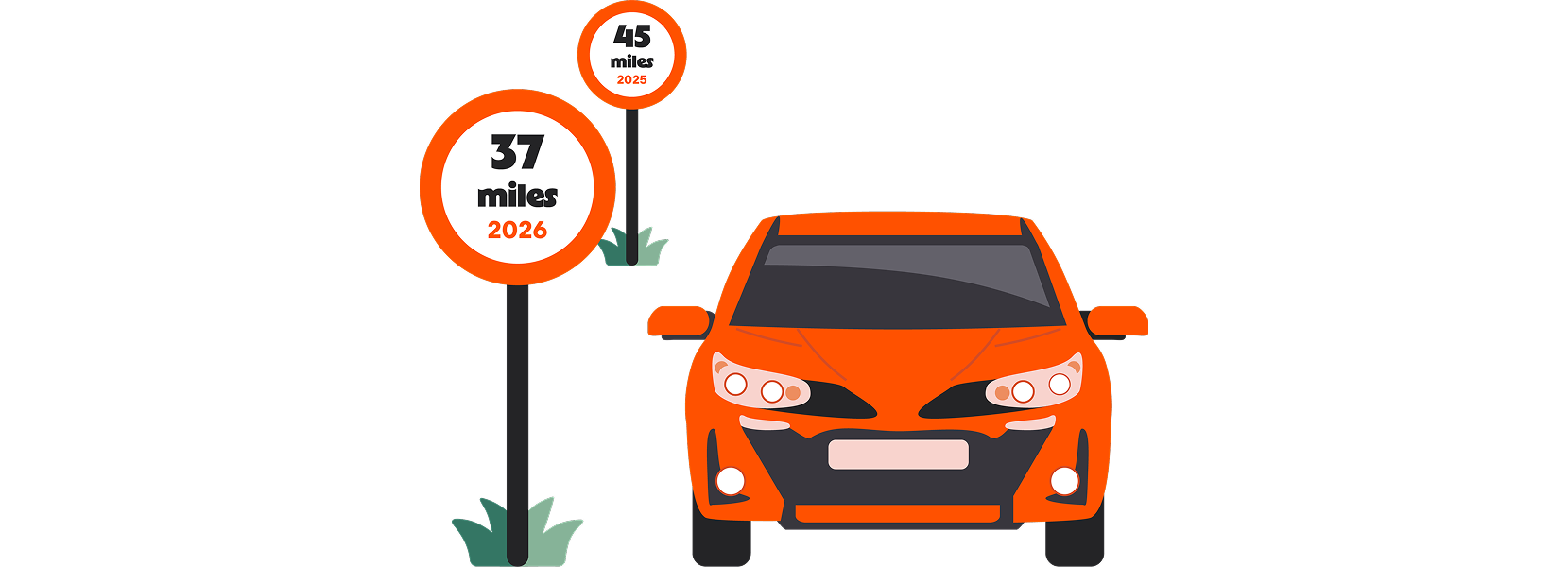
UK buyers are increasingly prioritising local convenience. In our 2026 survey, the average travel distance reported for a driver's most recent car purchase dropped to 37 miles (down from 45 miles in 2025), with more than half staying within a 25-mile radius. Only 7% travelled over 100 miles (down from 11% in 2025). This suggests UK drivers are craving convenience, perhaps over a broader choice, when it comes to buying a car.
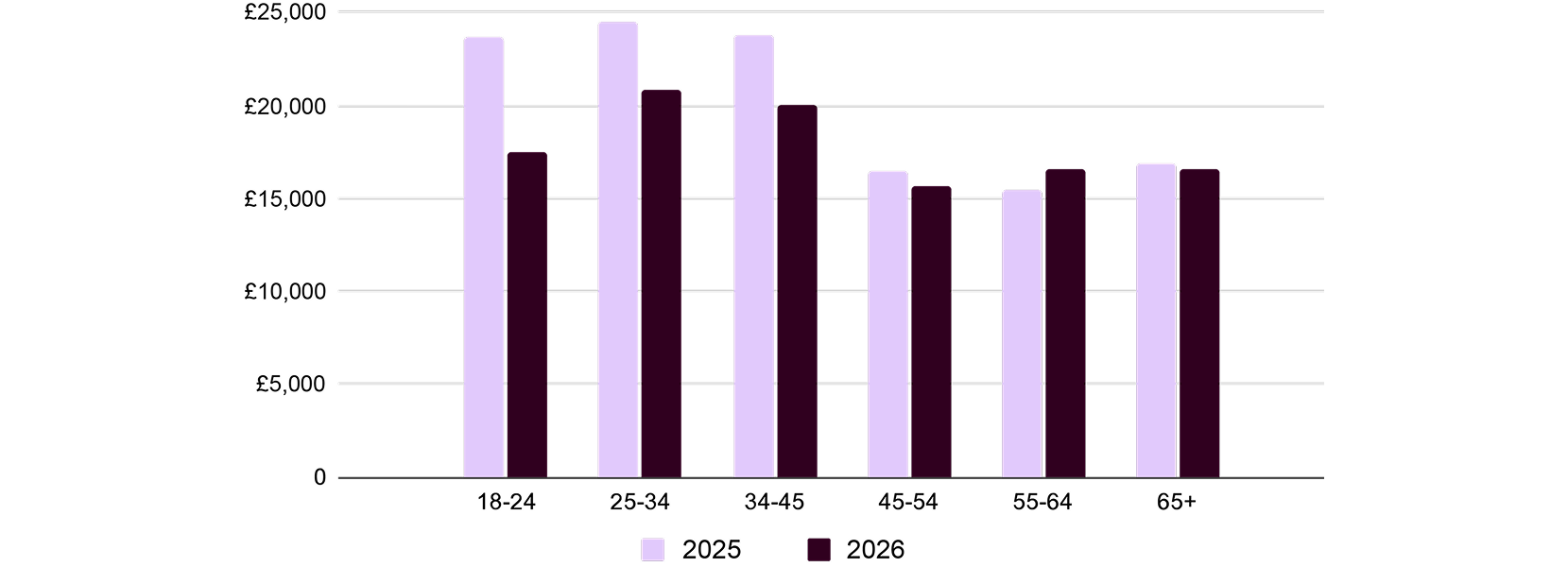
According to our 2026 survey of 2,000 UK drivers, the average amount UK drivers report having spent on their most recent car is £17,555. This is down £2,148 on the £19,703 reported in our 2025 survey.
Around one in ten drivers (11%) said they'd paid under £5,000 for their car, while nearly one in seven (15%) said they'd paid over £30,000.
In the 2025 survey, younger drivers reported higher average spends than older drivers, but that picture has shifted this year. Older drivers now report the highest spends, with 55- to 64-year-olds the only age group to report an increase: up 7.5% from £15,449 in 2025 to £16,603 in 2026.
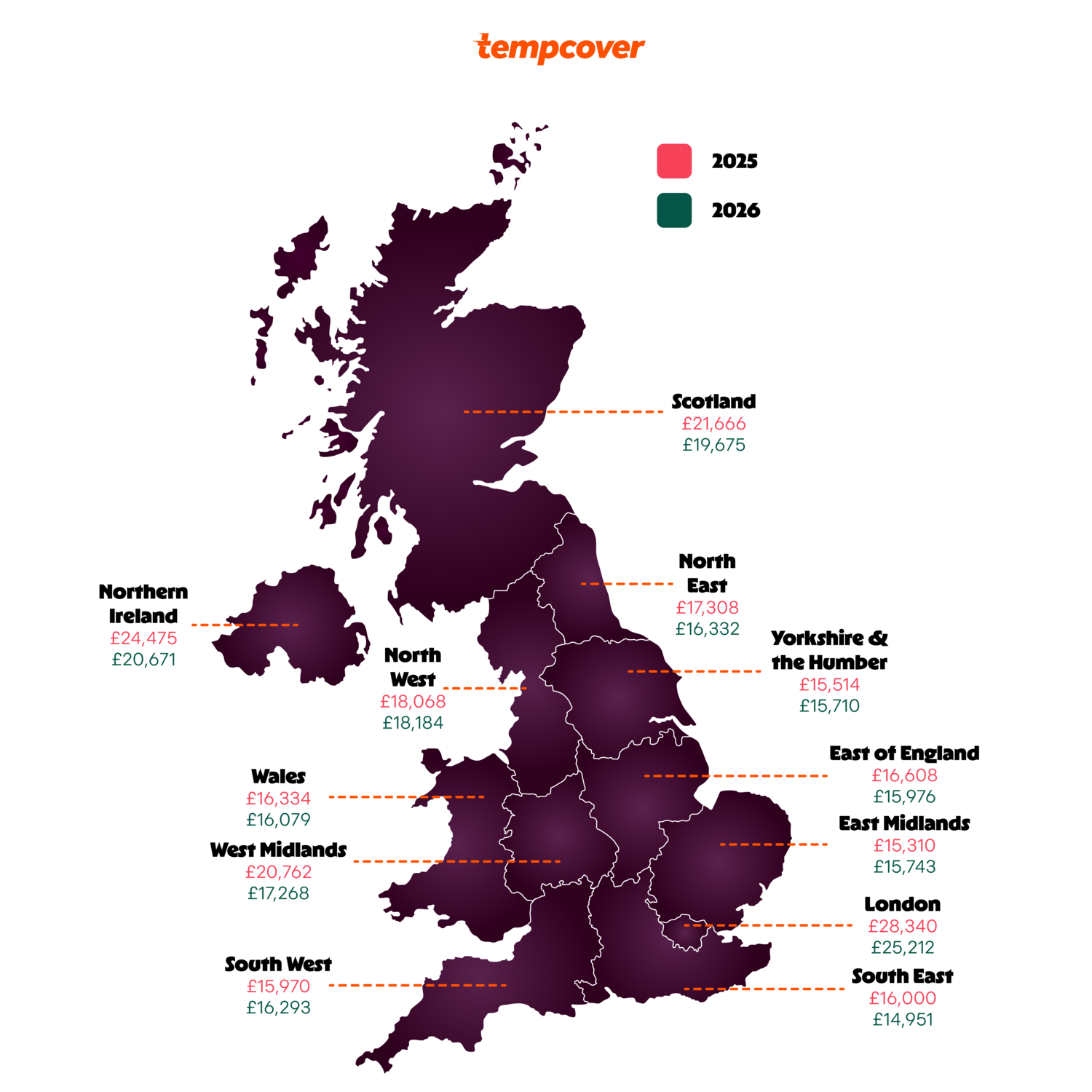
There were also some striking regional differences when looking at reported vehicle budgets. Londoners still top the list in our 2026 survey with an average spend of £25,212 on their most recent car (down from £28,340 in 2025), followed closely by Northern Ireland at £20,671 (down from £24,475 in 2025). Scotland ranked third at £19,675, showing a decrease from the £21,666 reported in 2025.
Drivers in the South East (£14,951), Yorkshire and the Humber (£15,710), and the East Midlands (£15,743) reported average purchase prices well below the national average of £17,555.
Despite lower overall budgets, drivers in the East Midlands and Yorkshire and the Humber reported higher average spends on their most recent car in our 2026 data than in 2025 - with East Midlands budgets up 2.8% and Yorkshire and the Humber up 1.3%.
Despite rising living costs, a surprising number of drivers continue to pay for their vehicles outright.
According to our 2026 survey data, 61% of respondents paid in full (using cash or debit/ credit card) for their most recent car purchase - a 2% increase on 2025’s results. Personal Contract Purchase (PCP) followed at 12% (up from 11% in 2025), while personal loans dipped slightly to 7% (down from 8%). With several routes available, it's worth weighing up PCP vs personal loan costs before committing to anything, since your choice can significantly change the total price you pay over time.
How much you want to spend and your overall budget will point you toward the right choice among the car finance options UK buyers have available.
Driver priorities show strong stability year-on-year and the data offers a clear picture of what matters most when buying a car. When asked what mattered most, price (52%), reliability (43%) and practicality (37%) still topped buyers’ priorities. Meanwhile factors like tech (7%), eco-friendliness (6%) and resale value (3%) ranked much lower.
Despite growing public conversations around sustainability and innovation, when it comes to making a purchase decision, most UK drivers are still focused on the basics: affordability and dependability.
| Priority | Percentage |
|---|---|
| Price | 52% |
| Reliability | 43% |
| Size/Practicality | 37% |
| Fuel efficiency/Running costs | 32% |
| Mileage | 24% |
| Style/Design | 19% |
| Brand reputation | 19% |
| Performance | 16% |
| Safety features | 11% |
| Maintenance/Repair costs | 10% |
| Tech features (e.g. infotainment, cameras) | 7% |
| Eco-friendliness/EV | 6% |
| Resale value | 3% |
This practical mindset is reflected in vehicle choice, too. When buying their most recent second-hand car, UK drivers surveyed in 2026 opted for vehicles averaging 4.7 years old with 31,643 miles on the clock.
Even with the UK government’s ZEV target requiring 80% of new car sales to be electric by 2030 (and 100% by 2035), used petrol and diesel cars will still be available for years to come.
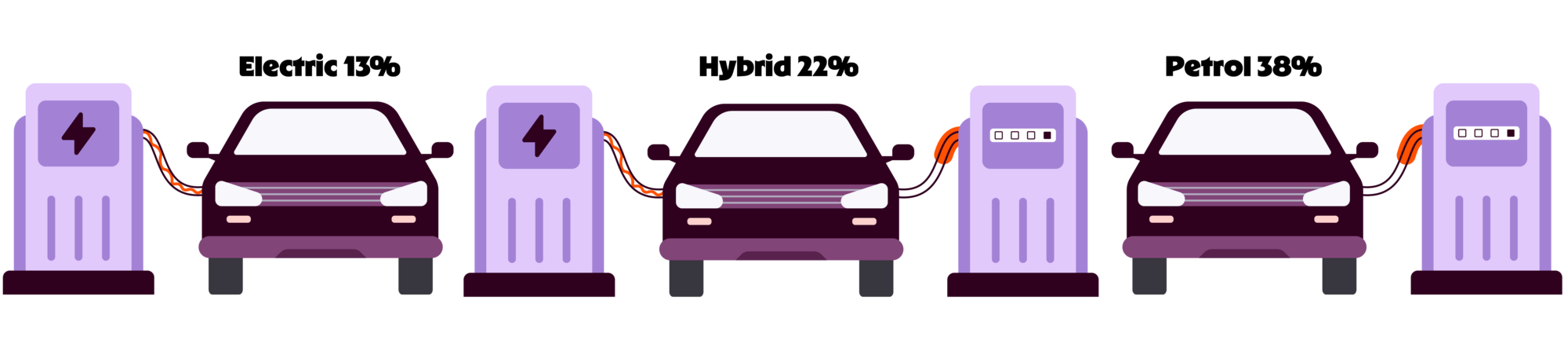
This might be why only 13% plan to buy an electric vehicle next. Drivers remain cautious about fully switching to EVs, with petrol vehicles still leading the way at 38%, followed by hybrids at 22%.
Our 2026 survey found that the average spend on a car was just over £17,555, with typical mileage slightly over 31,600 miles.
If you are looking to buy, we’ve analysed the current market to see which used models are most available within this typical budget and mileage range. This list includes some of the best used cars under £20,000 for UK buyers.
Here are the cars with the highest number of listings currently available that meet three key conditions:
| Make | Model | Availability under 40,000 miles* | |
|---|---|---|---|
| 1 | Vauxhall | Corsa | 4,128 |
| 2 | Nissan | Qashqai | 3,798 |
| 3 | Volkswagen | Polo | 3,254 |
| 4 | Volkswagen | Golf | 3,243 |
| 5 | Ford | Puma | 3,125 |
*Autotrader as of 3/9/26
| Make | Model | Availability £15,000-£20,000* | |
|---|---|---|---|
| 1 | Nissan | Qashqai | 1,935 |
| 2 | Ford | Puma | 1,628 |
| 3 | Volkswagen | Golf | 1,619 |
| 4 | Ford | Kuga | 1,401 |
| 5 | Volkswagen | Polo | 1,339 |
*Autotrader as of 3/9/26
| Make | Model | Availability under <£5,000* | |
|---|---|---|---|
| 1 | Ford | Fiesta | 3,454 |
| 2 | Vauxhall | Corsa | 2,868 |
| 3 | Ford | Focus | 2,471 |
| 4 | Vauxhall | Astra | 1,817 |
| 5 | Fiat | 500 | 1,405 |
*Autotrader as of 3/9/26
Start by deciding what type of car fits your lifestyle - family size, commute, fuel type, manual or automatic. Research models thoroughly by checking reviews, reliability ratings, and running costs to find the best fit.
Set a realistic budget before you start shopping, and don’t forget to factor in ongoing costs like fuel, tax, insurance and general maintenance. Our survey shows 61% of buyers pay with cash or debit card, but financing is also an option.
With a clear idea of your needs and budget, the next step is to explore your options.
Decide whether you want a new car, which often comes with warranties and the latest features but at a higher price, or a used car, which can offer better value but may require more research and careful checks.
Once you’ve chosen new or used, consider where to buy:
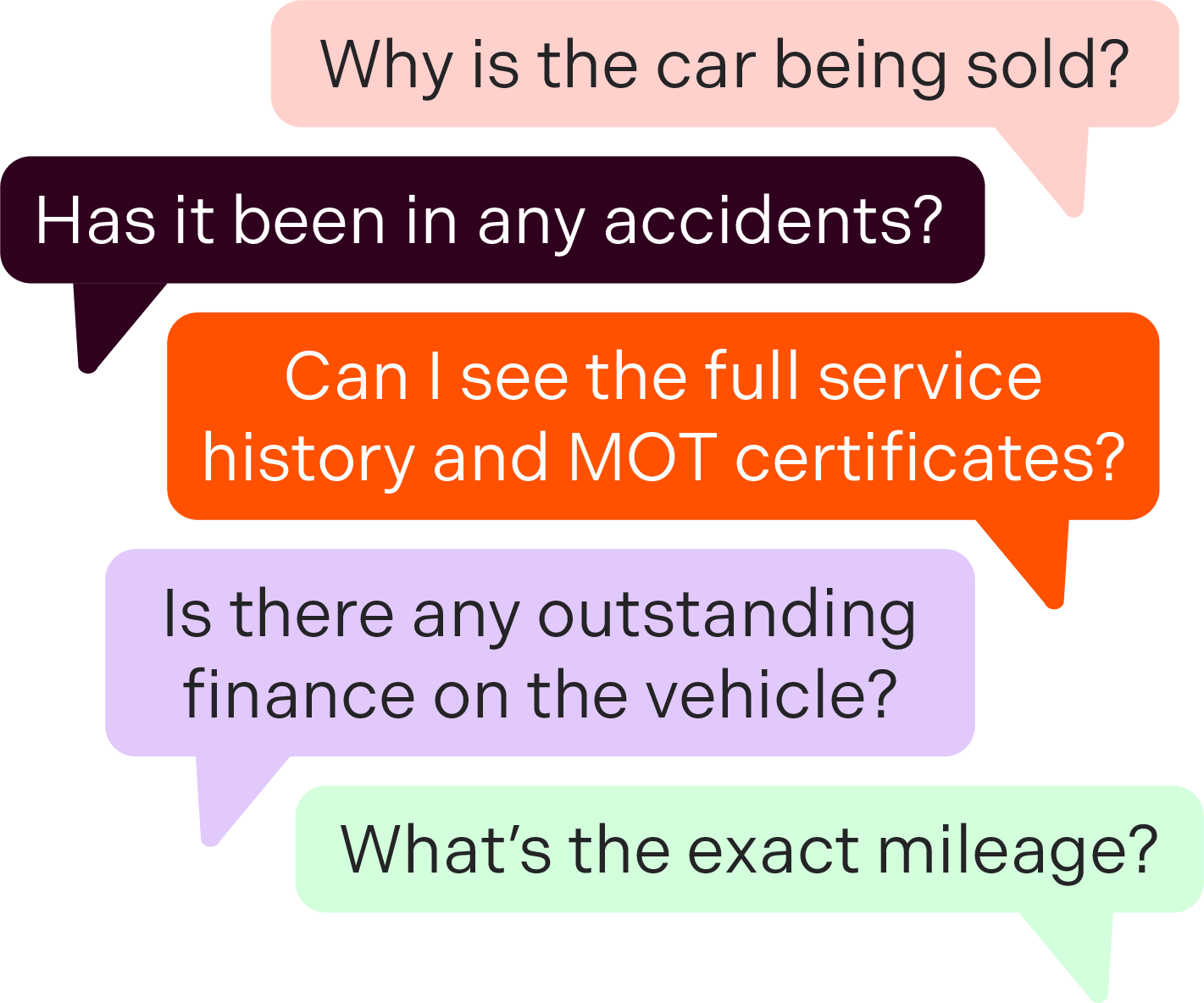
For used cars, it’s especially important to ask the seller key questions before viewing:
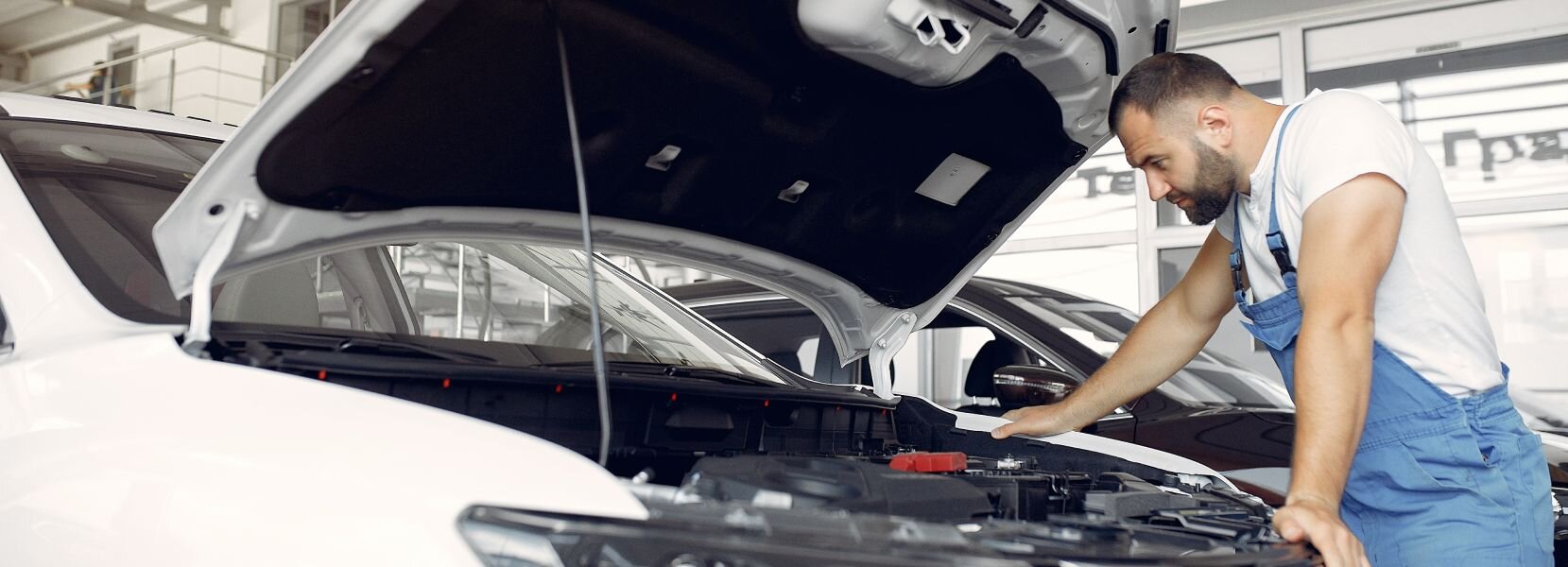
Whether you're buying new or used, it's important to give the car a proper once-over before committing. For brand-new vehicles, this will mostly be about checking for any cosmetic issues or unexpected faults.
But if you're looking at a used car, a more thorough inspection is essential to spot signs of wear, damage, or hidden problems. Here's what to look for:
If you're considering a used car, check its tax and SORN status via the DVLA, and consider a paid vehicle history check (e.g. RAC or MotorCheck) to spot any mileage issues or outstanding finance.
You should ask the seller for the service history, and if possible, bring someone knowledgeable, like a trusted mechanic, to help assess the car in person.
Before buying any car, you’re going to want to take it out for a test drive. This gives you the chance to get a feel for the vehicle on the road and also see if you find it comfortable.
This is also the perfect opportunity to ask questions about the vehicle’s performance and any other potential issues.
It’s a legal requirement for all drivers on UK roads to have relevant insurance. If you’re buying from a dealer, they are likely to have this in place. If buying privately, you or the buyer will need to sort insurance for test drives yourselves.
Before taking a test drive, you should check whether you can drive someone else’s car on your insurance first. Some policies will include Driving Other Cars (DOC), but it’s likely to be third party only.
Taking out temporary car insurance provides comprehensive coverage for the time you need, putting yours and the owner’s mind at ease. It’s a fast and flexible option, as it’s available from one hour to 28 days.
Potential penalties for driving without insurance include:
If the case goes to court, you could get:
Not sure if a car’s covered before you get behind the wheel? Our What is AskMID and How to check if a car has insurance guides will help you know what to look out for.
While some dealers may have a set route for test drives, if you’re buying privately you may be able to go your own way.
You could bring someone with you to accompany the test driver. They’ll be able to fill you in from a passenger’s perspective and offer a second opinion, noting things you might miss and serving as a witness.
Did the test drive go OK? If you’re ready to commit to a purchase, think back over everything you’ve learned during the buying process and prepare any final questions.
Remember, nothing has been signed yet, so if you want to pull out, you can.
Once you’ve agreed to the sale, it’s time to gather the funds and decide on the most appropriate payment method.
Be wary of paying by cash in a private sale, and don’t hand over any money until you have signed the relevant documentation.
When buying the car, you should ensure you have all the relevant paperwork:
You’ll also need to arrange your insurance.
Need some more time to arrange your annual cover? Temporary car insurance gives you extra time to find the right insurance.
Whether you’ve arranged annual cover or have temporary car insurance to get the car home, you should double-check your policy is active and that all the details are correct.
You can’t legally drive until your car is taxed. Sort this as soon as you’ve bought the car (it will be part of the process if buying from a dealership). Maybe take some time to read up on the latest driving laws and rules at the same time so you’re fully up to speed when you take the keys.
You need to update the V5C logbook with your details as the new registered keeper. You can do this directly via https://www.gov.uk/vehicle-log-book.
Take some time to learn where everything is before driving on your own, e.g. the lights, wipers, hazards and infotainment screen.
If you have any doubts about your new car, it’s worth getting a professional to look over it. Book a service for reassurance and to help avoid any little niggles becoming bigger (and more expensive) problems.
By following the tips in this guide and trusting your instincts, you should be in a good place to buy a car with confidence.
Now the fun begins, and you can start planning your first independent drive.
Don’t rush, take your time and, most importantly, enjoy your new car.
Survey carried out: 19th to 25th August 2026
Number of respondents: 2,000
Demographics: UK drivers who own a car which they bought themselves
We also currently hold an ‘Excellent’ rating on Trustpilot with over 50,000 reviews.