There were 128,375 casualties of all severities following road traffic accidents in 2024 - a decline of 3% compared to 2023. Although no one wants to be involved in a car accident, these figures show it can happen to anyone.
It can be a stressful and worrying experience in the moments after a crash, so it’s important to know what to do to keep everyone safe and within the law.
If you experience a bump or worse, it’s important to stay calm and do the following:
- Stop the car in a safe place - Section 170 of the Road Traffic Act 1988 states drivers must legally stop their vehicle at the scene of an accident. Failing to stop could land you with 5 to 10 penalty points, an unlimited fine, potential driving disqualification and even up to 6 months in prison.
- Put your hazard lights on and turn off the engine - So other road users can see you’re dealing with an incident.
- Check for injuries - Both yourself and any passengers. At this point, it can also be worth checking if those in the other vehicles involved are OK. If anyone is hurt or a vehicle is blocking the road, call 999 or a motorway SOS phone if there is one nearby. You should also call the emergency services if you believe the collision was deliberate or caused by drink or drugs.
- Get everyone out of the car - Unless injuries make this impossible. If you’ve had an accident on the motorway, you should all stand behind the crash barrier - well away from oncoming traffic. Pets should stay in the car to avoid them running into the road.
- Exchange details but don’t admit fault - Calmly speak to the other driver involved and exchange the following information: name, address, phone number, vehicle registration, driving licence number, vehicle registration and insurance provider details. You should also check if the driver is the registered owner; if they’re not, you’ll need their details, too. Don’t apologise or admit fault as this verbal statement could be used against you or even invalidate your claim.
- Ask any witnesses for their contact details - Their independent accounts of the accident can help decide who is at fault for the claim.
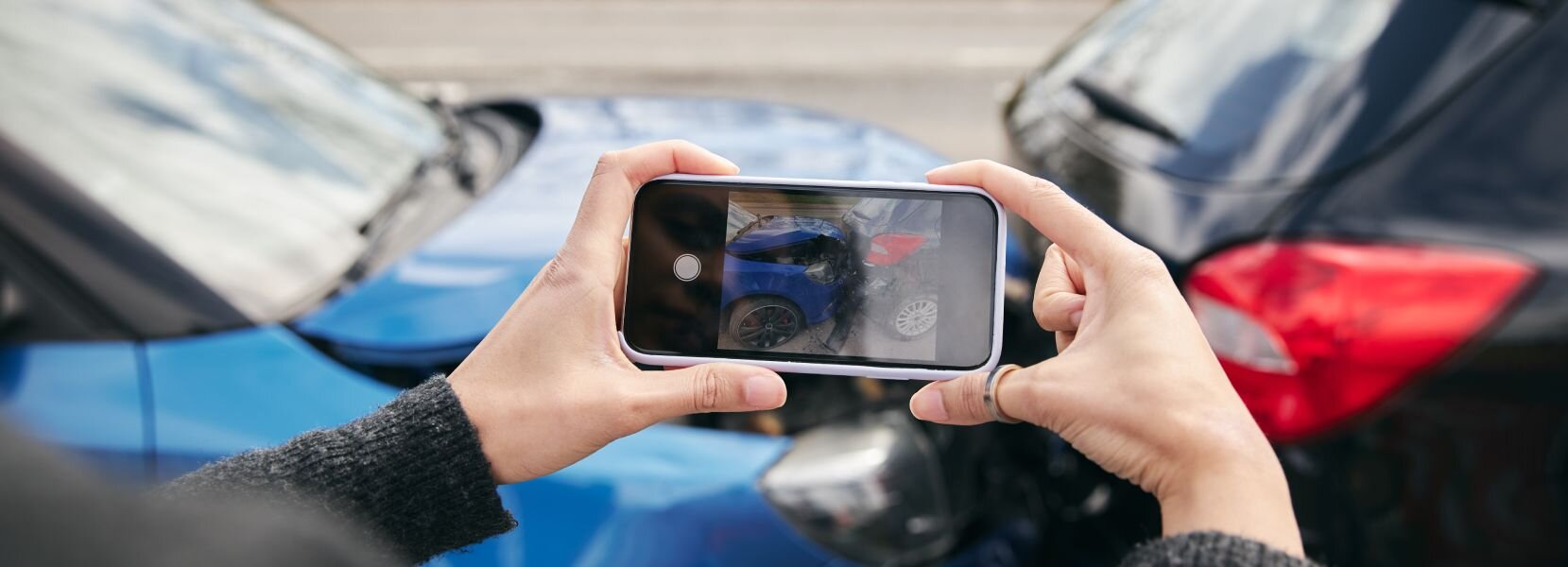
- Record what happened - Take photographs and videos of the damage to vehicles and surrounding properties and area. Make sure you have a record of the vehicle’s condition as this can all be used for evidence. You should also take a photo of the road layout, relevant road signs and evidence of the crash e.g. skid marks.
- Note down the details - Capture all the details of the scene: what time did it happen? What were the weather conditions? And how was visibility at the time? All of these are easily forgotten details.
- Save any dashcam footage - This can provide clear and time-stamped video evidence of exactly what happened, helping resolve disputes faster.
When should you call your insurer?
You should try to contact your insurer within 24 to 48 hours of the incident, no matter who is at fault - and even if you don’t intend to claim. If the other driver is uninsured or didn’t exchange details, you should also tell your insurer. They may suggest you apply for compensation through the Motor Insurers’ Bureau (MIB).
The same applies when covered by temporary car insurance. Just make sure you also have the owner’s details to hand if borrowing a car.
When should you call the police?

If someone suffers an injury, no matter how minor, you must report the accident to the police within 24 hours. If there is only a minor injury that does not require immediate response, call 101.
Other reasons to call the police include:
If you were at fault and found to be guilty of careless or reckless driving while under the influence, the police will be in contact and you could face prosecution.
Likewise, if you hit a parked car or someone’s property and there’s nobody to tell, you legally must leave a note.
Will an accident affect my insurance?
Being involved in an accident typically increases an insurance premium, as insurers will view a collision as a potential future risk. If you make a claim, you’ll also potentially lose your no-claims discount.
If you were at fault for the accident, your insurer will pay the other driver’s cost - and this is likely to be reflected in the increase of your next premium. Even a non-fault claim can potentially increase your premium by a small margin.
Your level of coverage also affects how much is covered:
- Comprehensive - Typically full financial protection for your car and towards any injuries.
- Third party - Legal minimum that covers the third party and their property if damaged in an accident.
- Third party fire and theft - Same as third party plus cover if your car is stolen, damaged or destroyed by fire.
Sources
https://www.theaa.com/car-insurance/advice/what-to-do-after-a-car-accident
https://www.rac.co.uk/drive/advice/road-safety/car-accident/
https://www.bbc.co.uk/news/articles/c5ypypy2jk2o
https://www.gov.uk/vehicle-insurance/if-youre-in-an-accident