Learning to drive
How to use your car mirrors correctly
What should you see in your side and wing mirrors
Ryan Barham
Last updated: 02/06/2026
Ryan Barham
Last updated: 02/06/2026
While learning to drive, you’ll have heard the three words ‘Mirror-Signal-Manouevere’ many, many times. You may also have been told to check your mirrors every 6 seconds.
There's a good reason for this - your mirrors give you the chance to check your surroundings and anticipate what other road users are likely to do. This, in turn, helps you stay safe on the road.
In your car you will find a rear-view mirror in the interior and two wing mirrors, one on the nearside and one on the offside. Together, these provide an almost 360-degree view around your vehicle that will help minimise risks while you’re driving.
The first thing to remember is you’re not using the interior mirror to look at yourself, it should offer you a clear view of the road behind. Manually position it so you can see your entire rear window and try to avoid tilting so you can see yourself. You don’t want to be blocking potential hazards.
Once you have set up the mirror, sit in the position you drive in and check everything is ok. When moving the mirror, grab the sides of it as fingerprint smudges can affect the view of the road behind you.
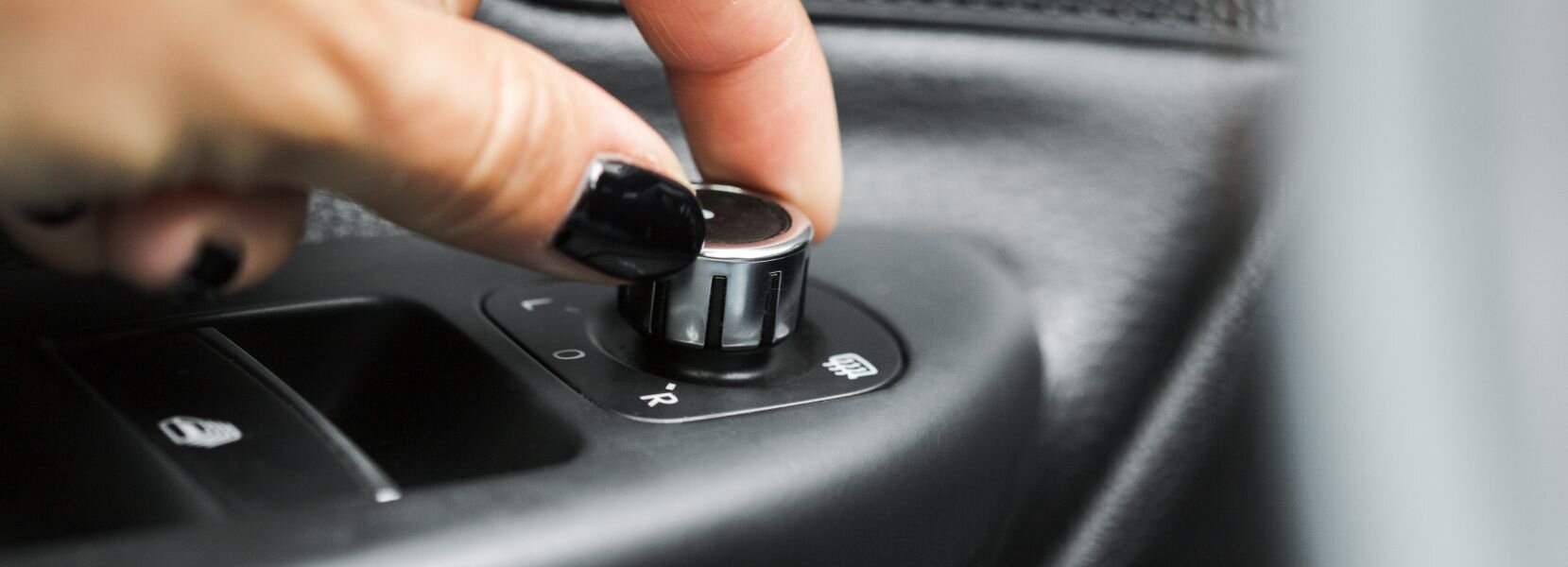
Many modern cars have electronic controls with simple, directional buttons to position your wing mirrors. However, if you’re driving an older car, you may have to physically move them or use a joystick/lever to get them in the right place.
Start with the offside (driver’s side) and, like with your rear-view mirror, try to sit in the position you will be driving in.
You should only be able to see a tiny amount of your own car body in both your nearside and offside wing mirrors. This will help provide you with a point of reference when it comes to driving and parking. PassMeFast recommends adjusting until the horizon (the point in which the distant road appears) is in the centre of the mirror and appears flat.
When it comes to the nearside mirror, you’ll repeat this process but want to leave the angle slightly lower than the offside. This will help you see the kern when pulling out or completing a manoeuvre.
Many side mirrors are slightly curved to provide a wide viewing angle on both sides of the vehicle. This wider field of vision is especially helpful when it comes to merging or changing lanes, turning and slowing down or even coming to a stop.
Just remember, like in that famous Jurassic Park scene, the ‘objects in mirror are closer than they appear’. This means taking extra caution of those drivers around you. You should check your mirrors and blind spots every time you open the door. Look out for vehicles AND pedestrians.
DVLA and Highway Code guidance (Rules 159-161) states:
Before moving off you should
Move off only when it is safe to do so.
Once moving you should
All mirrors should be used effectively throughout your journey. You should
Remember: Mirrors – Signal – Manoeuvre
You should get into the habit of checking your mirrors before performing actions like braking, signalling, changing direction or speeding up. One memory hack is to always think ‘mirror before feet’ - this should help you remember to check your mirrors before touching the brake or accelerator.
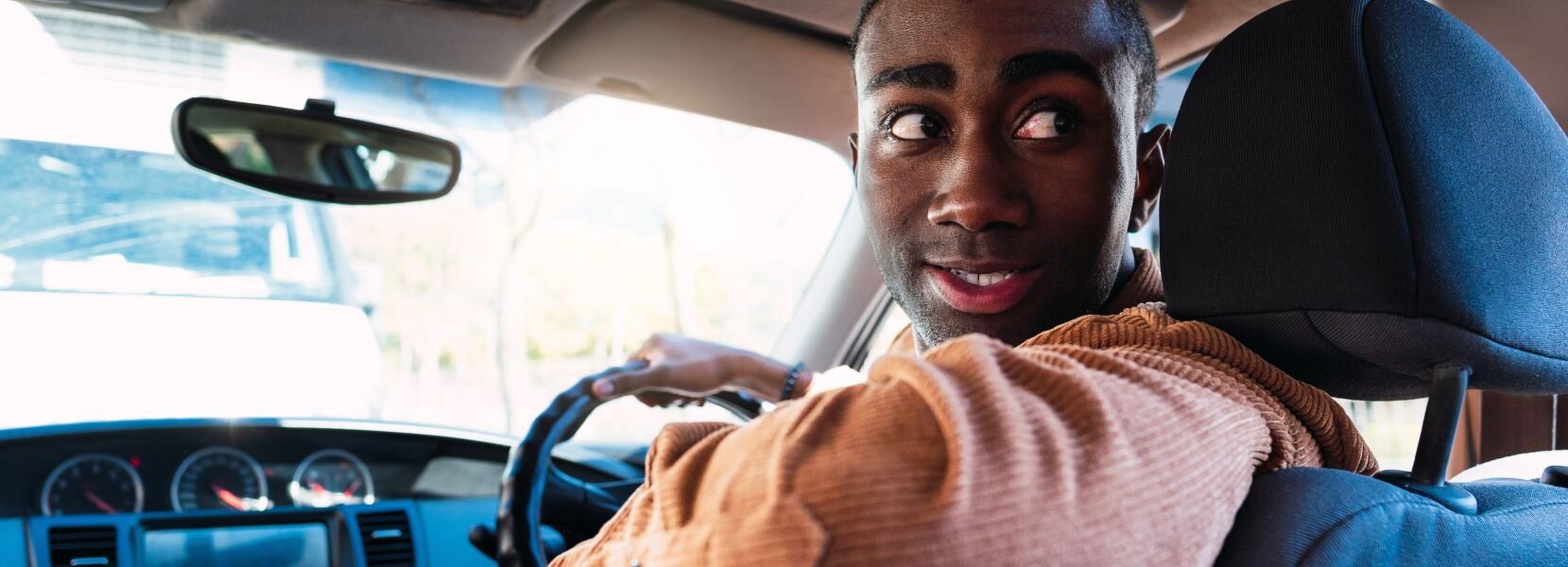
You should also use the mirrors to check your blind spot - the area around your vehicle you are unable to see either in your mirrors or by looking ahead.
The main blind spot sits behind the driver’s right shoulder. If you ignore this and end up in an accident, you could be penalised with dangerous driving.
This offence can lead to an unlimited fine, potential disqualification from driving and 3 to 9 points on your licence. If the offence is serious enough, you could end up disqualified from driving or in prison.
The RAC’s blind spot guide recommends the following actions every time you check your blind spot:
Remember that motorbikes, cyclists and pedestrians may try to pass either side of your vehicle. Larger vehicles may have larger blind spots so leave plenty of space and take extra caution when driving near these.
There are a number of blind spot mirrors and monitors available that can help you see your blind spot, but it’s important to still follow the instructions above.
A broken mirror will not only affect your visibility but - if it’s on the driver’s side - could find you guilty of driving illegally. You can drive with a slightly damaged mirror but be aware this can affect your visibility and be unsafe. It’s highly recommended you get it fixed as soon as possible.
Be aware that mirrors that are hanging off and wobbling are also against DVSA guidelines: ‘Each mirror must be fixed to the vehicle in such a way that it remains steady under normal driving conditions’. This is so the mirrors do not fall off and cause a hazard to other drivers.
Driving with a missing or smashed offside mirror could lead to you getting a vehicle defect rectification notice. You’ll have 14 days from the date of this notice to get it fixed and show proof (e.g. a receipt from the mechanic) to the police before receiving 3 penalty points and a fine of up to £2,500.
Can you fail an MOT due to a broken mirror? If a mirror is missing, excessively damaged, insecure or not providing an adequate view to the rear, then, yes, this is an automatic fail. Slightly damaged and loose mirrors will be examined on a case-by-case basis but again are best to get sorted asap.
There are a number of ways that your car mirrors - especially wing mirrors - can be damaged, from parking down narrow streets and in too-tight parking spaces to being clipped by other cars in different lanes.
KwikFit recommends doing the following to minimise wing mirror damage:
Mastering the use of mirrors is a sign of a confident driver - and practice makes perfect. If you need some extra hours behind the wheel with a friend or family member, take out some learner driver insurance.
If you’re already driving and your car is having a mirror replaced, don’t forget temporary car insurance can get you moving for just the time you need.
https://readytopass.campaign.gov.uk/driving-skills/observation-signalling-and-planning/
https://www.billplant.co.uk/resource-hub/how-to-adjust-car-mirrors/
https://driving-test-success.com/using-car-mirrors/
https://driving-tests.org/beginner-drivers/mirrors-how-to-adjust/
https://www.rac.co.uk/drive/advice/learning-to-drive/blind-spots-a-guide-for-drivers/
https://www.kwik-fit.com/blog/are-damaged-or-missing-wing-mirrors-illegal
Yes, you can claim for wing mirror damage if you have comprehensive insurance but often the repair cost will be lower than your policy excess.
You can hang things from your rear-view mirror but be aware that anything viewed to be obstructing a driver’s view of the road can land you with a fine of up to £1,000 and 3 penalty points. According to the RAC, this includes sat navs, fluffy dice, stickers and dirty windscreens.
Yes, you can get points for driving with a broken wing mirror. This is because it could be considered as using a vehicle in a dangerous condition. Under UK law, you must have two fully functional mirrors - and one must be on the driver’s side (offside).
If you feel confident enough, you can replace a car mirror yourself. There are plenty of step-by-step guides online to help you. If you don’t feel comfortable doing this, you can take it to a professional mechanic or garage who should be able to sort it relatively quickly.
Related tags:
Temporary Car InsuranceWe also currently hold an ‘Excellent’ rating on Trustpilot with over 50,000 reviews.