Learning to drive
Learner Plates Rules
Why do learners need to display L plates?
Ryan Barham
Last updated: 01/09/2026
Ryan Barham
Last updated: 01/09/2026
About to book your first driving lesson? This is an exciting time when you'll finally get behind the wheel. But before you hit the road, you'll need to make sure you have learner plates on the car you're driving.
This guide takes you through the main L plate rules, including the legal requirements and reasons why driving with L plates can be helpful for you and those around you.
Learner plates make it easy to spot a learner driver when they're on the road. They are magnetic signs or stickers that are displayed prominently on a car that's being driven by someone who is either taking lessons or taking their practical driving test.
Displaying L plates – or D plates in Wales – is a legal requirement for anyone who is driving with a provisional licence. The rules around how they're displayed are there to keep you as the learner driver and those around you safe.
D plates are the Welsh equivalent of learner plates. D stands for Dysgwr, the Welsh spelling for learner.
As well as being a legal requirement, there are a few advantages of displaying learner plates while you're learning to drive:
L plates should only be displayed when the vehicle is being driven by a learner driver who has a provisional licence. If the car isn't being driven by a learner driver, the plates should be covered or removed.
There are a few rules to be aware of when fixing L plates to a car. By law:
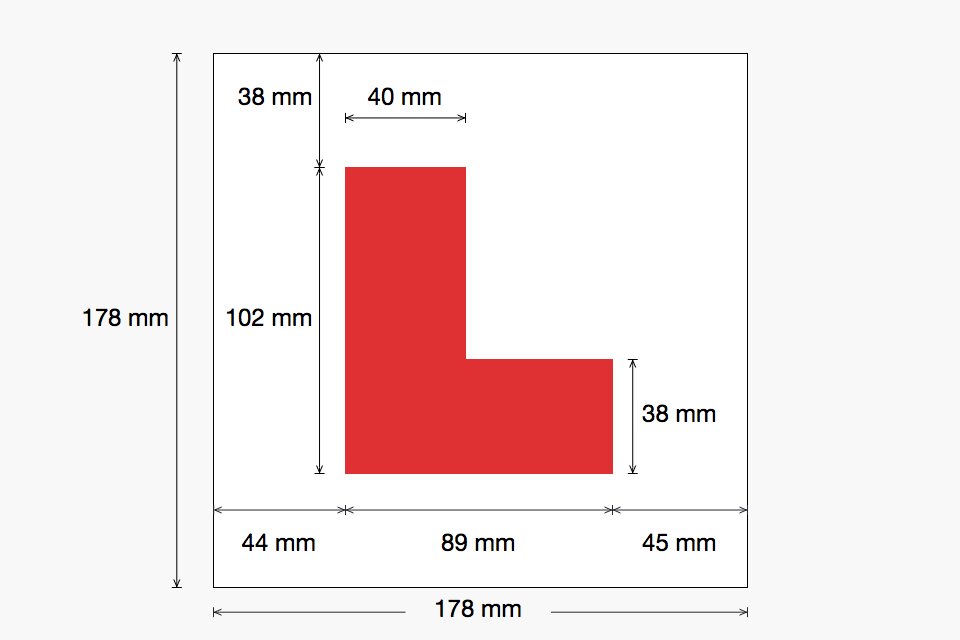
They should feature a red L on a white background.
Ready to get in the car and start learning? Whether you’re still at school or have just finished college, you might be waiting for the green light.
We know it’s hard not to feel impatient when your friends start driving before you do! As exciting as learning to drive might be, the rules surrounding when you can learn to drive are in place for a reason. Here’s everything you need to know before you get behind the wheel for the first time.
L plates are available both online and in a range of shops, including:
In the UK, you can start driving a car at 17 years old.
This includes the day of your birthday, so you won’t need to wait a single day longer!
Even if you’ve turned 17, you need a provisional licence before you can legally take your first driving lesson. The Driver and Vehicle Licensing Agency (DVLA) provides them for cars, motorbikes, mopeds and other vehicles.
If you’d like to be prepared, you can apply for your first provisional driving licence before you turn 17. There are some requirements:
No. Young people in the UK must wait until they’re 17 years old before learning to drive. This includes taking lessons with an instructor and learning privately with family and friends.
If you work on a farm, you may be able to drive agricultural vehicles at 16 years old. You can legally apply for provisional tractor entitlement and take a tractor test.
In England and Wales, you can learn to drive a car at 16 years old if any of the following apply:
You’ve applied for or have already received the Personal Independence Payment – specifically, the higher rate of the mobility component.
You’ve received the higher rate of the Disability Living Allowance for children since before you turned 16.
If you’re 17 years old and you have a provisional driving licence, you can start learning to drive! There are just a few rules to keep you safe on the roads, which we’ve explained below.
1. Supervision
Many new learners choose to take their lessons with a driving instructor but this is not a legal requirement. You can practise driving with family and friends but there are some rules surrounding who can teach you to drive. The person teaching or supervising you must be:
While you only have a provisional driving licence, you cannot drive alone on public roads.
2. Insurance
You do need insurance when you’re learning to drive. This still applies if a family member is already covered on the vehicle too.
Before you practise in someone else’s car, you must make sure that:
If you’re caught driving without insurance, you could be banned from driving, get an unlimited fine, and get up to eight penalty points on your licence. It’s not worth rushing the process. Be patient and wait for the time when you can learn to drive legally.
3. Using L Plates
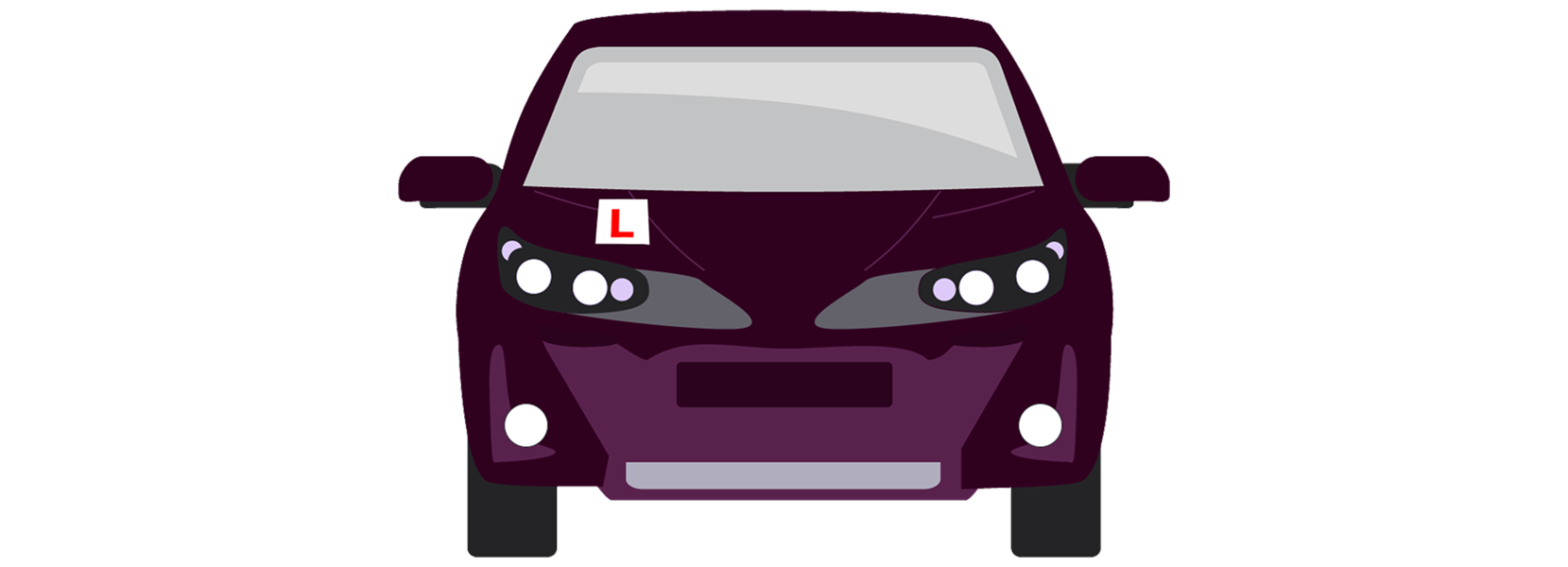
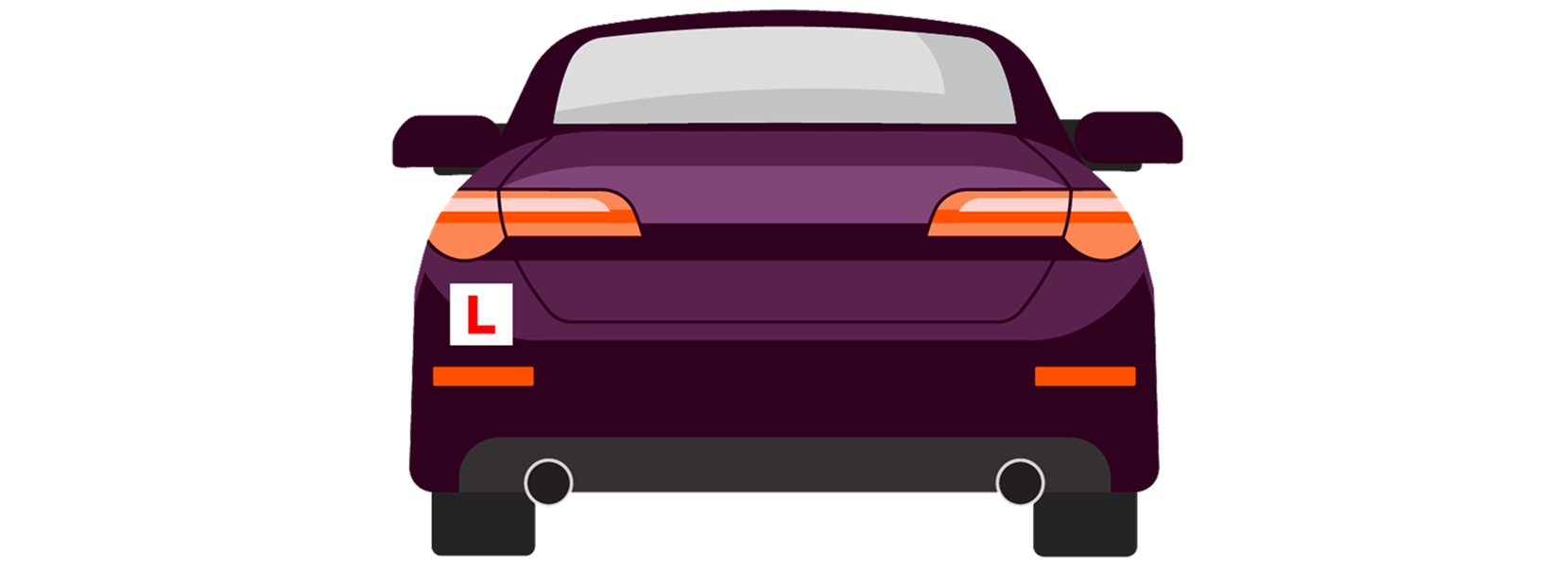
It’s also a legal requirement to put an L plate on the front and rear of your vehicle. This ensures that other drivers recognise you as a learner driver, which improves your safety.
Many L plates are magnetic but some are adhesive. They must have a red L on a clear white background and they need to be the right size too.
You can only drive a car without supervision when:
No. You can start learning to drive before you’ve taken your theory test.
However, you can’t take your practical driving test until you have passed your theory test. Many learners like to complete it as early as they can and you can book online with the DVSA. You can take your theory test from the date of your 17th birthday.
Two L plates should be attached to the car, one at the front and one at the back, before you set off on your driving lesson. You can add more to the sides of the vehicle if you want to, but these aren't a legal requirement.
Avoid sticking the L plates to the windscreen as this can obstruct your view. Instead, place them on the bonnet of the car or on the bumper. Driving instructors also often have a magnetic sign that sits on top of the car and displays the L plates.
You could suffer a couple of penalties if you don't display an L plate or if it’s not the right size:
To avoid this, regularly check that the plates are clean and securely attached. After a few lessons, you might find that they are damaged or not visible anymore. Adjust and secure them so that they are visible and don't fall off during your drive. Or attach new ones.
Displaying L plates is compulsory during your driving test, and they must be correctly positioned on the vehicle throughout the examination. Even if you're driving your instructor's car, it's worth double-checking that the plates are in place.
If the car doesn't have plates or if they're not in the right position, your test could be cancelled, and you won't get a refund. So, make sure the L plates are where they should be before your test. Also, double-check that the rest of the car meets the rules.
As well as L plates, there are a few other things you need before you can get behind the wheel. Here's a checklist to help you prepare:
Once you've successfully passed your driving test, you must remove or cover the L plates on your car.
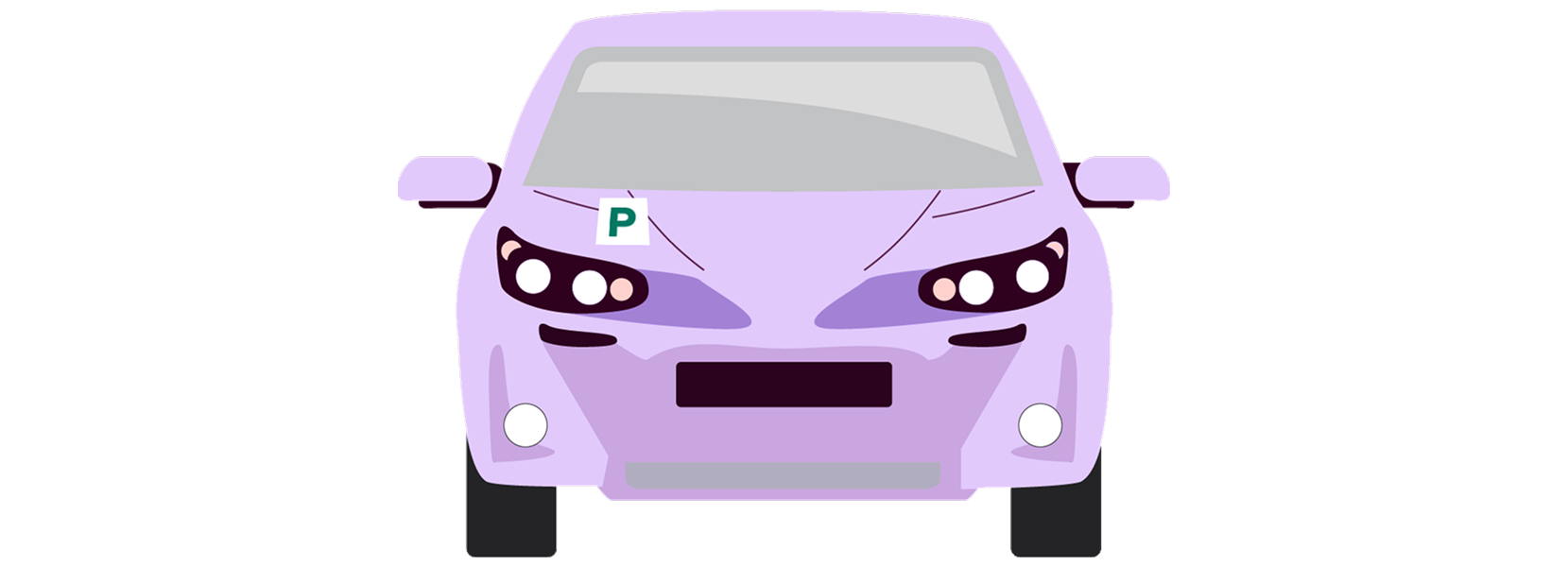
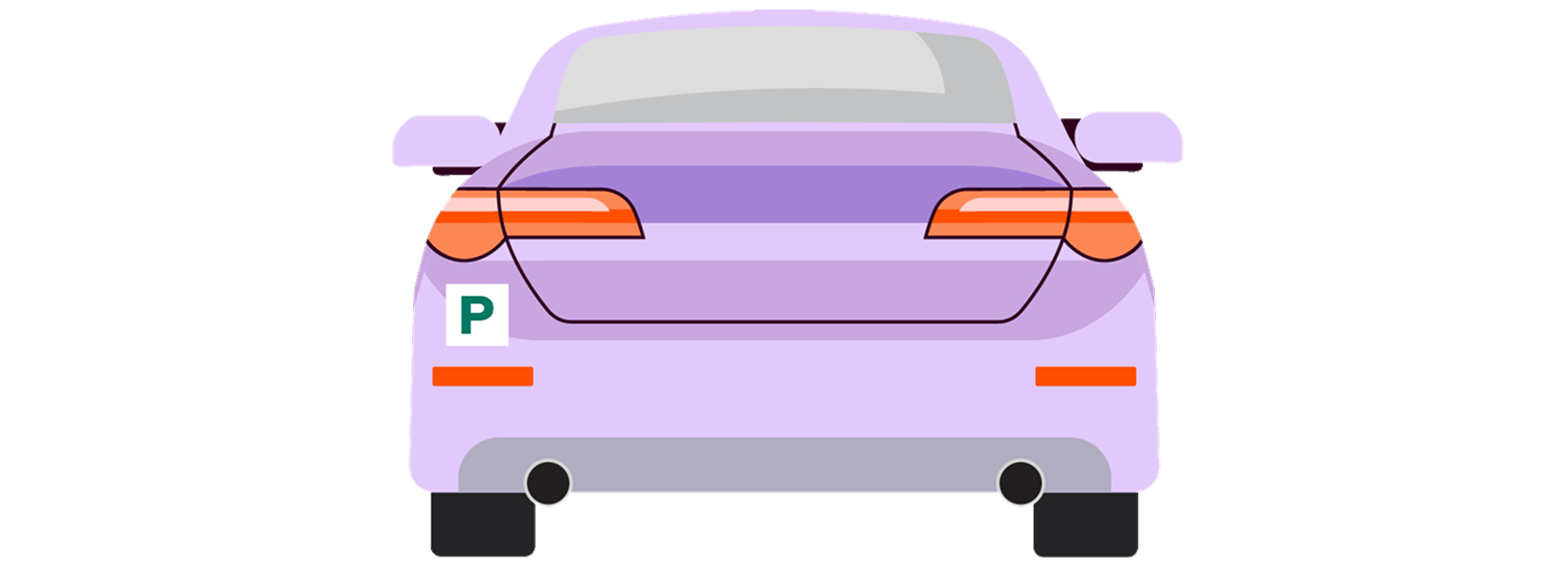
However, you might decide to swap the learner plates for green 'P' plates.
These probationary (hence the P) plates tell other motorists that you're a probationary driver who has recently passed your test.
While not legally required, P plates can let others know that you're still gaining confidence on the road.
No, P plates are entirely optional. There’s no legal requirement to display them in England, Scotland or Wales. In Northern Ireland, drivers must display R plates (restricted driver) for up to two years after passing their practical test.
As long as you feel you need to. There’s no set time limit and you don’t have to remove them if you’re still nervous while driving. Most drivers will take them off once they feel confident driving on all the different road types.
P plates should be placed in the same position as L plates.
If you stall or hesitate, other drives can see that you are new to driving
Some other drivers will be more patient with you e.g at roundabout or in traffic
They can help reduce anxiety, especially in your first few solo drives
P plates are widely available to buy. You can purchase them online, in supermarkets, petrol stations, hardware stores and garages.
Yes, you can keep P plates on when driving on the motorway. This could help ease anxiety as motorway driving is often a completely new experience for new drivers.
If you ask a friend or family member to teach you to drive instead of - or in addition to - a qualified instructor, make sure that the L plates are in place before you set off.
It's equally important to take out insurance. Choosing temporary cover for learner drivers means that you have a policy in place during the span of your lessons without having to commit to constant cover.
Related tags:
Temporary Car InsuranceTempcoverLearning to driveLearner Driver InsuranceLearner DriverWe also currently hold an ‘Excellent’ rating on Trustpilot with over 50,000 reviews.