Learning to drive
What is a contraflow system?
Staying safe in roadworks
Ryan Barham
Last updated: 03/06/2026
Ryan Barham
Last updated: 03/06/2026
Contraflow systems can feel daunting the first time you encounter one. Driving on the opposite side of the road with tight lanes made up of cones or temporary barriers can be unsettling. Even the road signs can be confusing.
In this guide, we’ll explain what you should expect, how you can stay safe, and even what you need to know ahead of your theory test.
Contraflow is a traffic management system used across motorways and public roads to keep traffic moving following accidents or road closures. They can be in place for anything from a matter of hours to a few months, depending on the level of work being done to the road.
There are both temporary and permanent contraflow systems, the latter being predominantly used for buses and bicycles.
You’ll often find contraflow systems in the following areas:
Contra means opposite, so an easy way to remember what it means is that you’ll be driving in the opposite direction.
If you’ve never driven through a contraflow system before, it can feel disorienting but once you know what you’re looking for, you should find them more straightforward to navigate.
The reason we have contraflow systems is because it’s not always possible or practical to keep putting diversions in place.
A contraflow system is designed to help the flow of traffic while work gets done, but there are a number of considerations before they can be implemented:
Once given the green light, there are still more discussions to be had around:
All of this contributes to why contraflow systems feel so structured. Every point above is there for a reason.
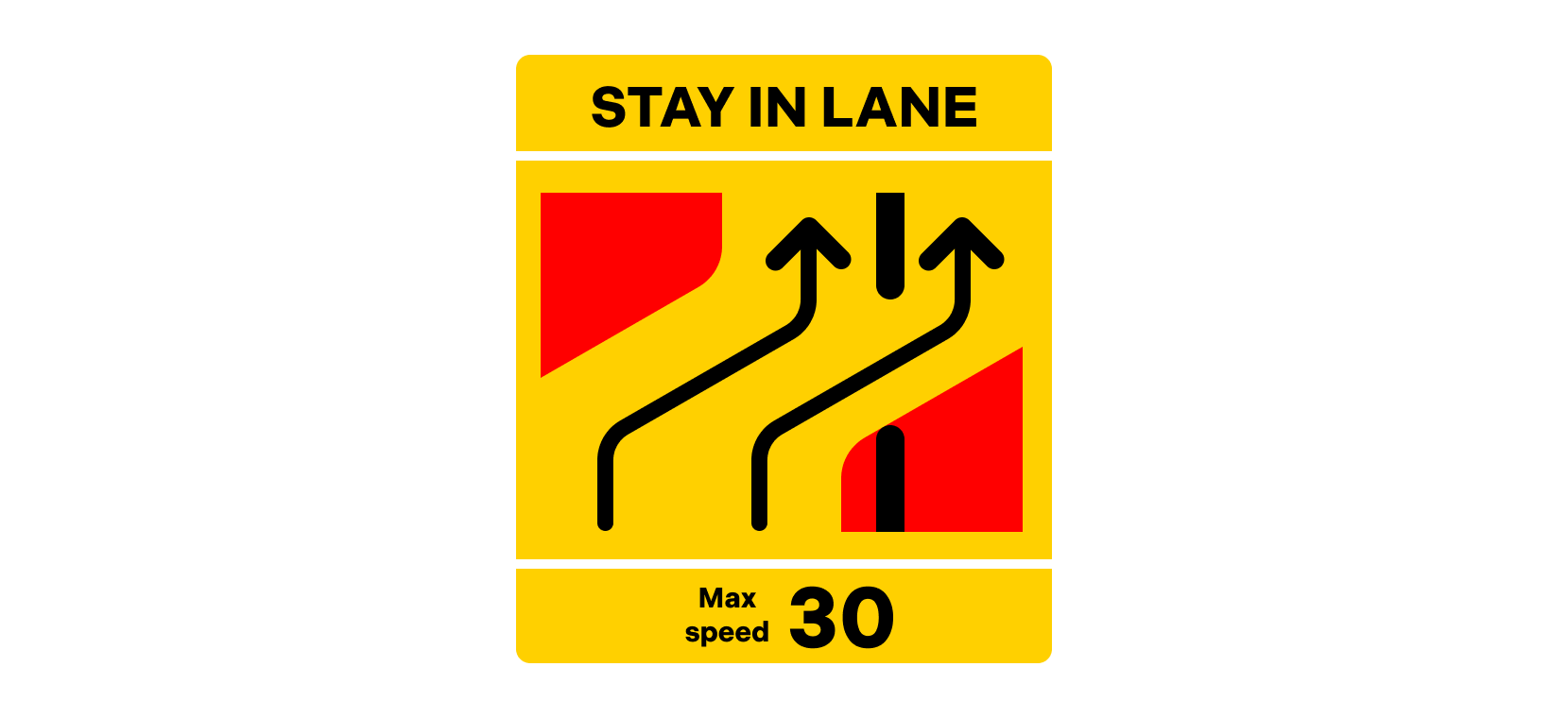
A temporary contraflow system sign is quite distinctive.
A yellow sign with black arrows showing the route you should follow and red blocks for the lanes that are blocked. It's often accompanied by the words STAY IN LANE (this is mandatory, not advisory) along with signs indicating the maximum speed limit.
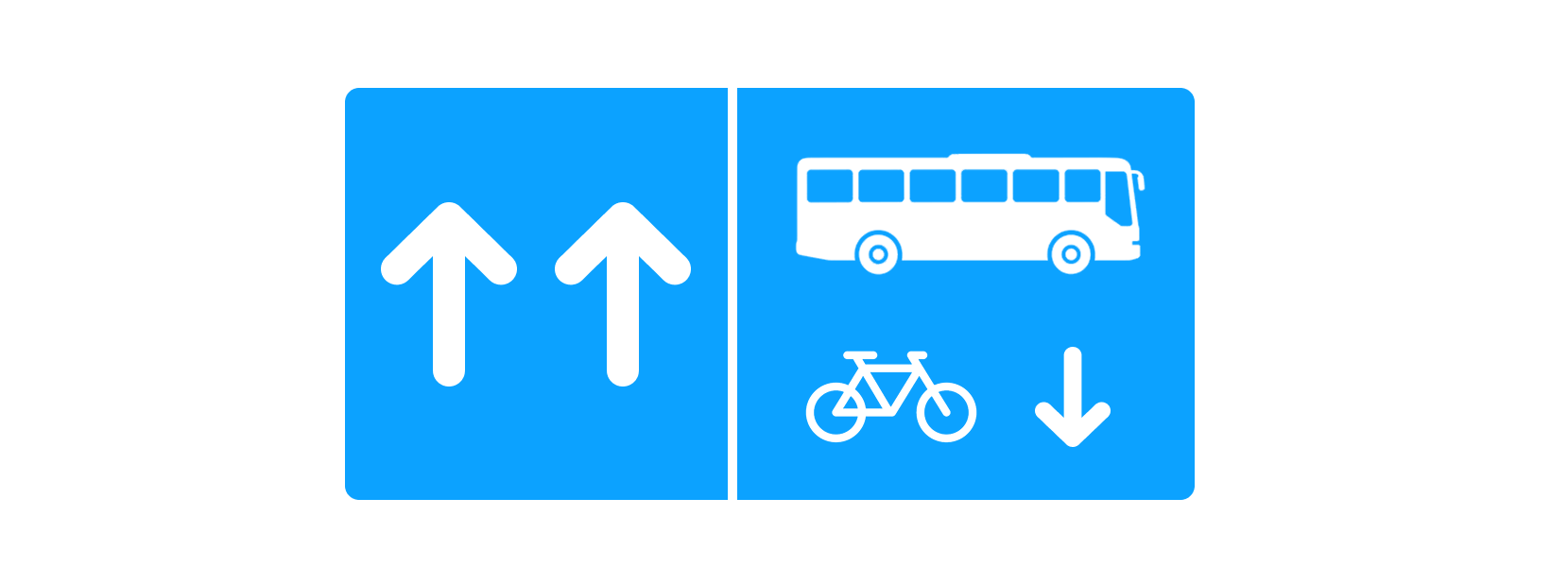
The permanent contraflow system sign for buses or bicycles is quite different:
This blue rectangular sign is separated into two sections, with the left-hand side’s arrows pointing the direction traffic on the left side of the road should follow, and right-hand side showing the vehicle type and an arrow pointing in the opposite direction.
If you’re in a car, avoid driving in a bus or cycle contraflow lane as you could end up receiving a fine.
The first thing you may notice when driving through a contraflow is just how narrow the lanes feel. But before that, you’ll see signs ahead of entry indicating when to expect the crossover point. You’ll typically be diverted via the central reservation onto the right-hand carriageway, driving against the usual flow of traffic.
This is when you might feel the squeeze but just try to remain calm. There are likely to be bigger vehicles than yours getting through. There will also be a temporary crossover installed when it’s time to leave and get back on your regular route.
There might not be a hard shoulder, meaning any breakdown or incident will be handled by the maintenance company. Follow staff instructions or directions on the signs if the worst does happen. There may also be temporary traffic lights to help both sides of the road stay safe.
Variable speed limits apply throughout and, again, these are mandatory and often enforced by cameras. Keep an eye on the signs above and follow their instructions.
If you encounter a contraflow during a motorway lesson, your instructor will guide you through it. They're legally required to have dual controls and will take over if needed.
Focus on the signs, reduce your speed, and stay in lane. Motorway driving is all new to you already, and a contraflow might just add to the unease. A motorway contraflow follows the same principles as any other, but the higher speeds of surrounding traffic and the absence of a hard shoulder can make it feel more intense.
Just remember to reduce your speed, follow the signs, and stay in your lane. You’ll be able to rely on your instructor for advice and they’ll be ready on the dual controls (as is required by law when learners drive on the motorway) if anything were to go wrong.
If you come across a contraflow during one of your driving lessons and aren’t sure what to do, trust your instructor. They’ll be able to talk you through what to do in real time. Try to focus on things you can control, like speed, lane position, and following the signs.
Contraflow systems can be part of your theory test, with questions likely to test your knowledge on:
An example question could be:
What should you do when you’re using a contraflow system?
Mastering complex road layouts like contraflows comes with time and experience, but the more time you spend on local roads, the more prepared you’ll be for the unexpected.
While you won’t be going out on motorways with your supervisor during private practice, you can enjoy extra hours of practice on local roads with a friend or family member using learner insurance - from just one hour to 28 days.
https://speedytests.co.uk/blog/what-does-the-contraflow-system-road-sign-mean
https://drivingtestsuccess.com/learners-guide-to-contraflow-systems/
When using a contraflow system, you should choose an appropriate lane in good time and stay in it. Reduce your speed, maintain a safe distance from the vehicle in front, and avoid overtaking.
When driving through a contraflow system, you can expect narrow lanes separated by temporary cones or barriers, reduced speed limits and temporary traffic lights, a lack of hard shoulder and crossover points where you transition onto - and back from - the opposite side of the road.
Yes, learner drivers can drive through contraflow systems. However, if the contraflow is on a motorway, a learner will only be able to legally navigate it if accompanied by an Approved Driving Instructor (ADI) in a car fitted with dual controls.
Yes, the majority of contraflow systems feature a reduced, mandatory speed limit to ensure the safety of both drivers and road workers in the tight lanes. This speed limit will be clearly displayed on the yellow approach signs and throughout the system. Failing to obey it can result in penalties including a fine.
Related tags:
Temporary Car InsuranceWe also currently hold an ‘Excellent’ rating on Trustpilot with over 50,000 reviews.